Redefining the Red Blotch Challenge: Navigating the Reality of Vineyard Management in Napa
Napa Valley, renowned for its picturesque vineyards and world-class wines, is facing a challenge that is reshaping the landscape of viticulture. The Red Blotch problem has become a prevalent issue, and while many are diligently working to address it, there are misconceptions about the nature of the problem and how to effectively manage it.
The Reality of Red Blotch in Napa
In a mature Napa vineyard, it's not uncommon to find about 5% of vines affected by various diseases or pests. Red Blotch, however, presents a unique challenge as it is virtually endemic, making the goal of reaching zero virus prevalence particularly challenging, especially on the valley floor.
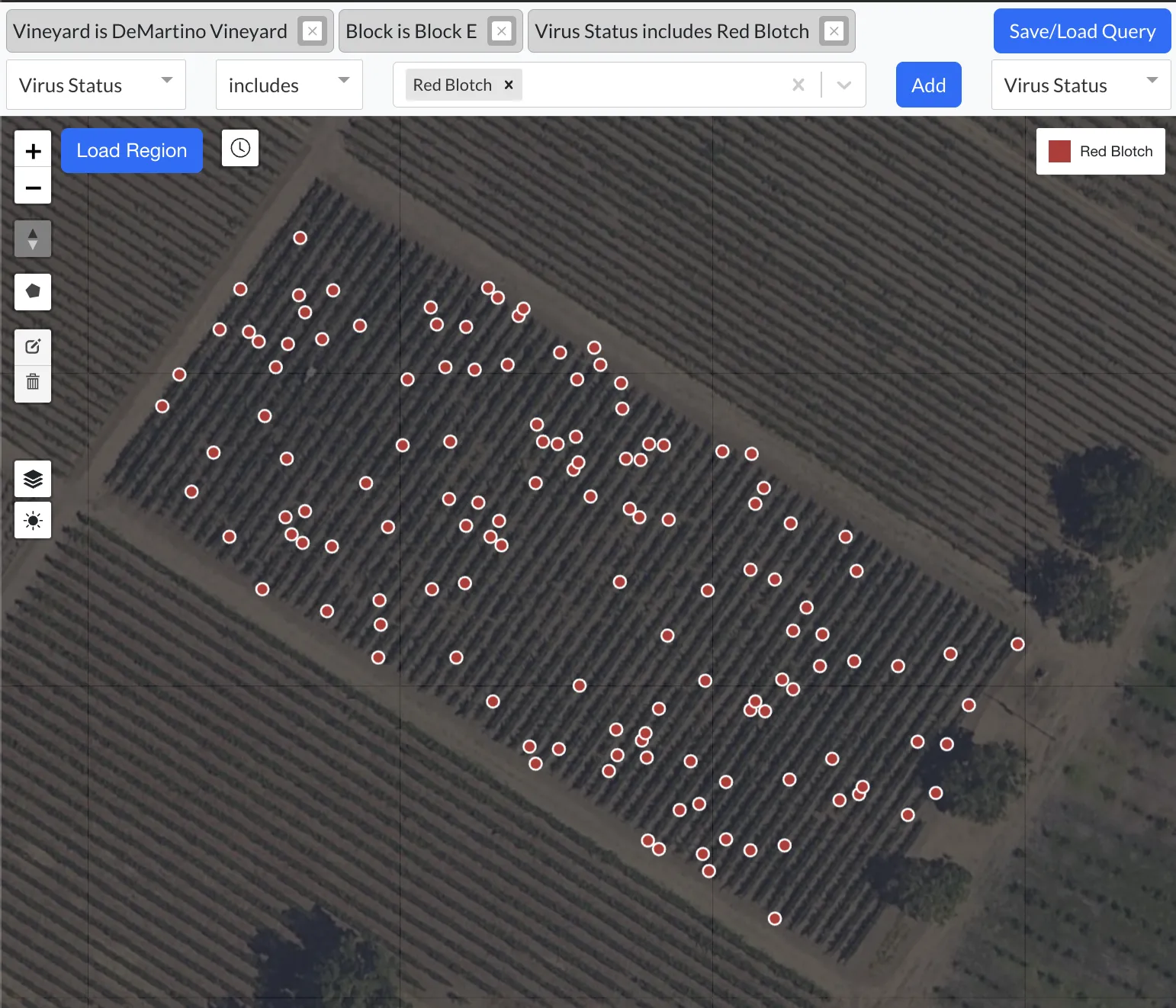
The spread of Red Blotch across the valley, from Napa to Yountville, is facilitated by insect vectors, making it difficult to contain the virus between properties. It's not uncommon for the average property is going to have at least a few blocks that look like this:
Shifting Perspectives on Replanting
Traditionally, when a virus spread to approximately 15% of a block, the common practice was to replant. However, the landscape has evolved, and the costs associated with replanting in Napa have skyrocketed, exceeding hundreds of thousands of dollars per acre. Developing new acreage can now surpass a million dollars, making replanting financially infeasible for many vineyards.
Roguing as a New Norm
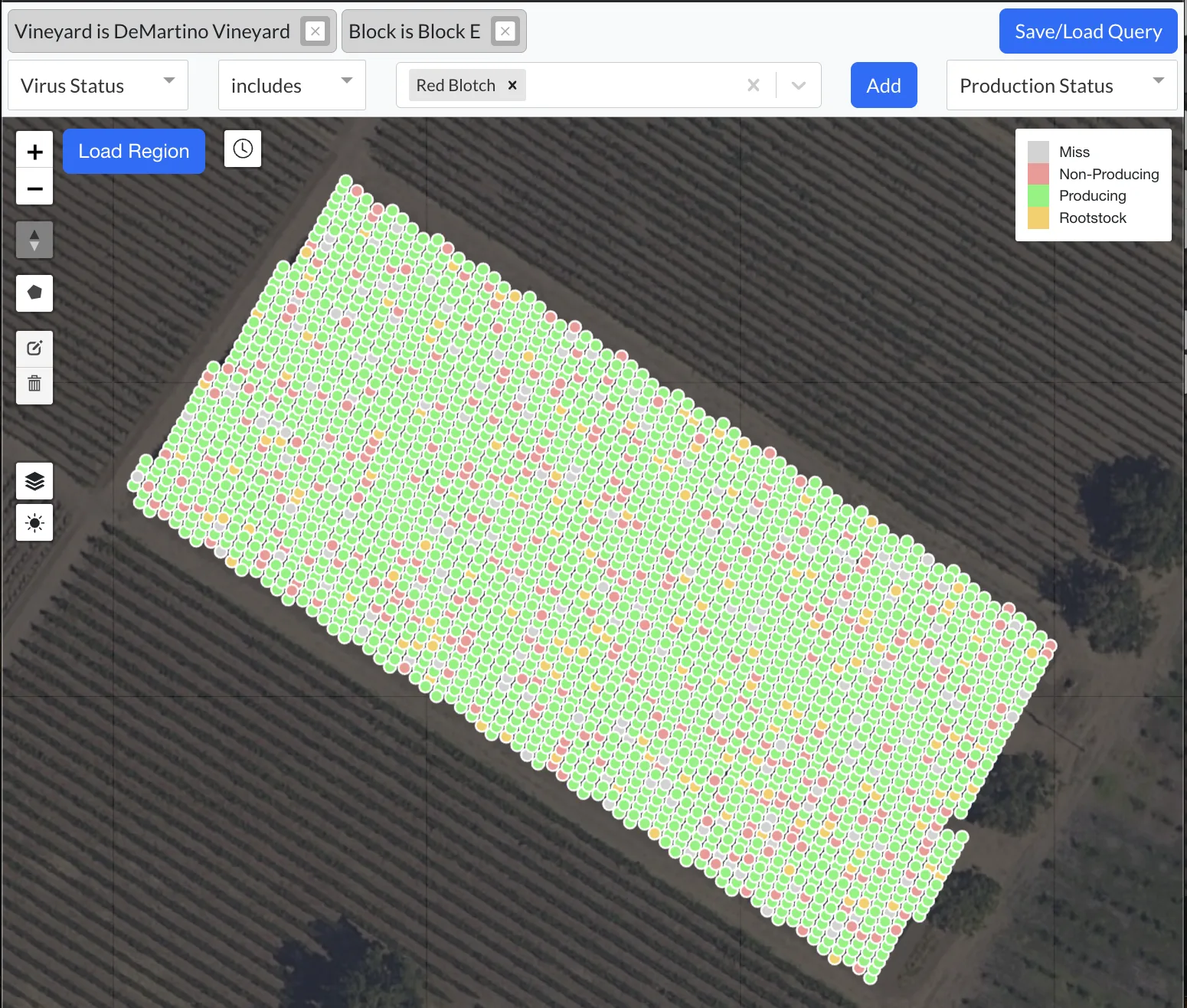
In response to the financial challenges of replanting, vineyard owners are intensifying testing and roguing, a practice of removing infected vines. However, this approach is transforming the appearance of vineyards. The consequence is that the average block will have a higher number of young vines interplanted alongside older ones. The average block is going to look something like this, with more young vines, misses, rootstocks dispersed among mature plants:
Challenges of Managing Young Vines
Managing interplanted young vines presents a unique set of challenges. Young vines require more nutrients, water, and overall care over three to five years. The organizational aspect of ensuring their proper maturation is complex, and neglecting them can result in stunted growth or death.
This has led to a paradigm shift in vineyard management practices, prompting a need for innovative solutions.
Sentinel: A Technological Breakthrough
Recognizing the need for a more efficient and organized approach to vineyard management, a new software solution has emerged. Sentinel Vine Manager is a groundbreaking tool that provides vineyard owners and managers with real-time information on every vine's age, production status, and virus status through a user-friendly smartphone app.
The app streamlines the management process, offering a comprehensive overview of the vineyard's health. With this technology, users can make informed decisions about testing, roguing, and overall vineyard maintenance.
By leveraging the power of technology, vineyard owners can navigate the challenges posed by Red Blotch more effectively, ensuring the longevity and sustainability of their vineyards.
Conclusion
The Red Blotch problem in Napa is reshaping the way vineyards approach management and sustainability. As replanting becomes economically challenging, the industry is embracing innovative solutions like the Sentinel Vine Manager. By understanding the reality of Red Blotch and adopting advanced technologies, Napa's vineyards can continue to produce exceptional wines while adapting to the evolving landscape of viticulture.
<!-- related-reading -->