The Downturn Is the Wrong Time to Stop Counting Your Vines
The California wine business is in a correction. That is not speculation. The 2025 harvest was the lightest in two decades. Napa Cabernet grape prices, while still premium, are under real negotiation pressure for the first time in years. Younger consumers are drinking less wine overall, and the luxury segment that once seemed immune to broader trends is feeling the pull of a softer market.
If you run an estate in Napa, you already know this. You have probably had at least one conversation this year about tightening budgets, deferring replants, or renegotiating grape contracts. Those are rational responses. But there is one category of cost-cutting that looks smart on a spreadsheet and turns out to be very expensive in practice: pulling back on vine-level data.
The Instinct to Cut Monitoring
When budgets tighten, monitoring and data collection are easy targets. They do not produce wine. They do not sell bottles. The ROI is indirect and sometimes hard to articulate in a board meeting. A vineyard manager might argue, reasonably, that they can walk the blocks and spot problems without a digital system.
That argument holds up in good years. When yields are strong and grape prices are high, a missed vine or an undetected virus pocket is a rounding error. You can absorb the cost of a few bad decisions because the margins cover it.
In a downturn, the margins do not cover it. That is precisely when every vine matters.
What You Cannot See at Walking Speed
Consider a 40-acre Cabernet block in Rutherford. At roughly 1,200 vines per acre, that is 48,000 individual plants. A vineyard manager walking rows will catch the obvious problems: dead vines, severe virus symptoms, broken trellis wire. What they will not catch, or will not catch consistently, is the slow accumulation of underperformance that erodes your economics.
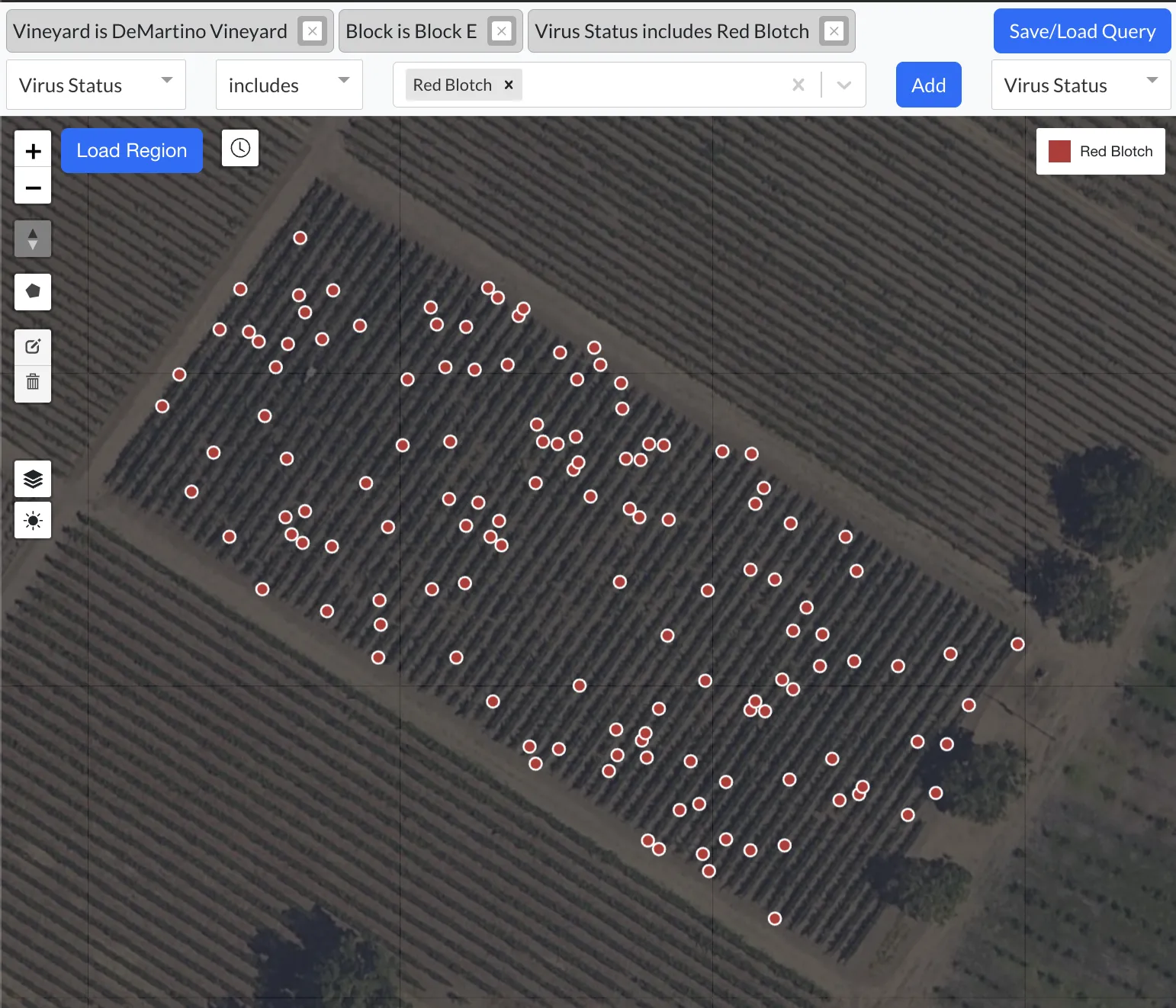
Red Blotch is the clearest example. Across large Napa datasets, roughly 20% of infected vines show no visible symptoms in any given year. They look healthy. They produce fruit. But that fruit has lower Brix, muted color, and reduced phenolic content. It gets blended in at harvest and quietly drags down your lot quality. In a year when you need every lot to perform at its price point, those hidden infections become a material problem.
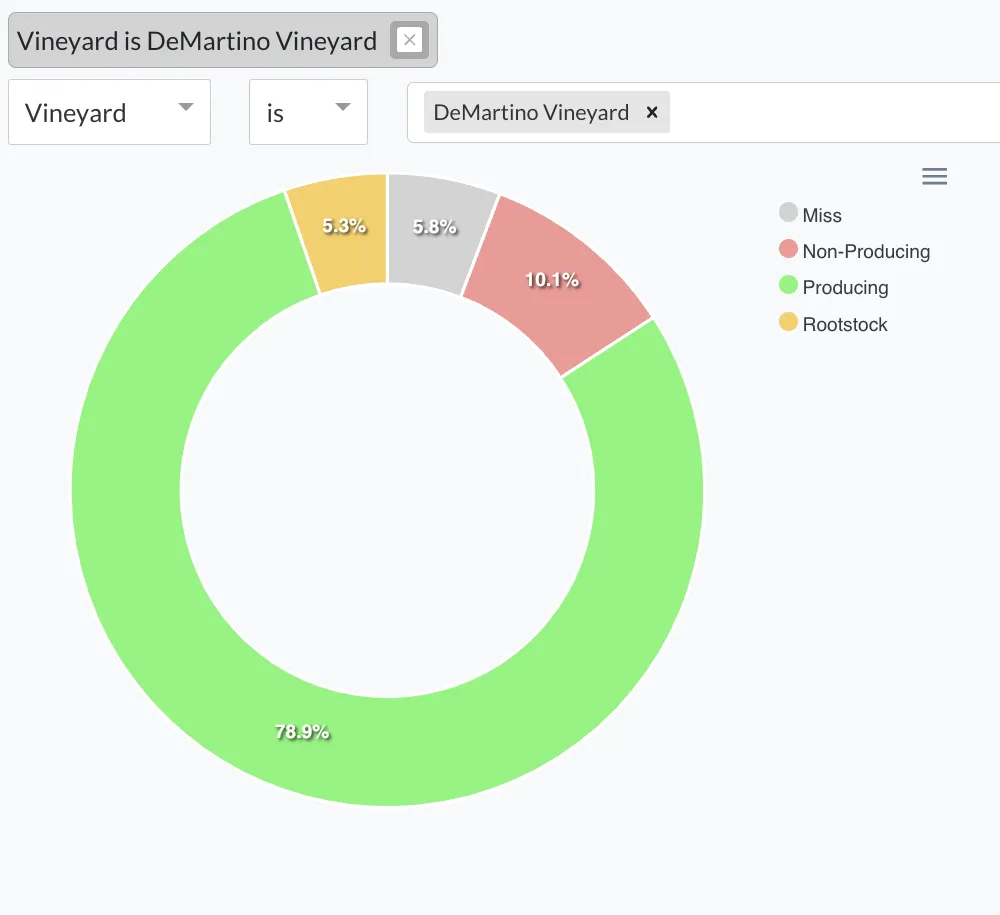
The same logic applies to vine mortality tracking, replant success rates, and irrigation efficiency. When you are selling fruit at $8,000 to $12,000 per ton, a 5% yield gap from poor vine health is not an abstraction. On a 40-acre block, that could represent $150,000 to $250,000 in lost revenue. The cost of knowing where that gap is coming from is a fraction of that number.
The Counterintuitive Math of Downturns
Here is what most budget discussions get wrong about vine data: they treat it as a growth investment. Something you add when times are good and cut when times are lean. In reality, the value curve is inverted. Vine-level data is most valuable when your margin for error is smallest.
During a downturn, you face decisions that are expensive to get wrong:
Which blocks to replant and which to nurse along. Replanting a Napa block costs $50,000 to $80,000 per acre when you factor in lost production during the establishment period. Without vine-level health data, you are making that call based on block averages and gut feel. With it, you can identify which rows or sections are truly declining and which still have productive life. That distinction can save six figures on a single replant decision.
Where to allocate limited farming labor. Labor is the single largest variable cost in Napa viticulture, and it is not getting cheaper. When you have to prioritize, knowing which blocks have active virus spread, which replants are struggling, and which sections need canopy attention lets you deploy crews where they will have the most impact.
How to negotiate grape contracts honestly. If you are selling fruit, buyers are more sophisticated than they were ten years ago. They want data. They want to know vine age distributions, virus pressure, and yield consistency by block. Growers who can provide that transparency command better prices, even in a soft market. Growers who cannot are at the mercy of the buyer's own assessment.
What Smart Operators Are Doing
The estates that navigate downturns well tend to share a pattern: they get more precise, not less. They do not cut data collection. They invest in it, because they understand that information asymmetry is a competitive advantage when everyone is under pressure.
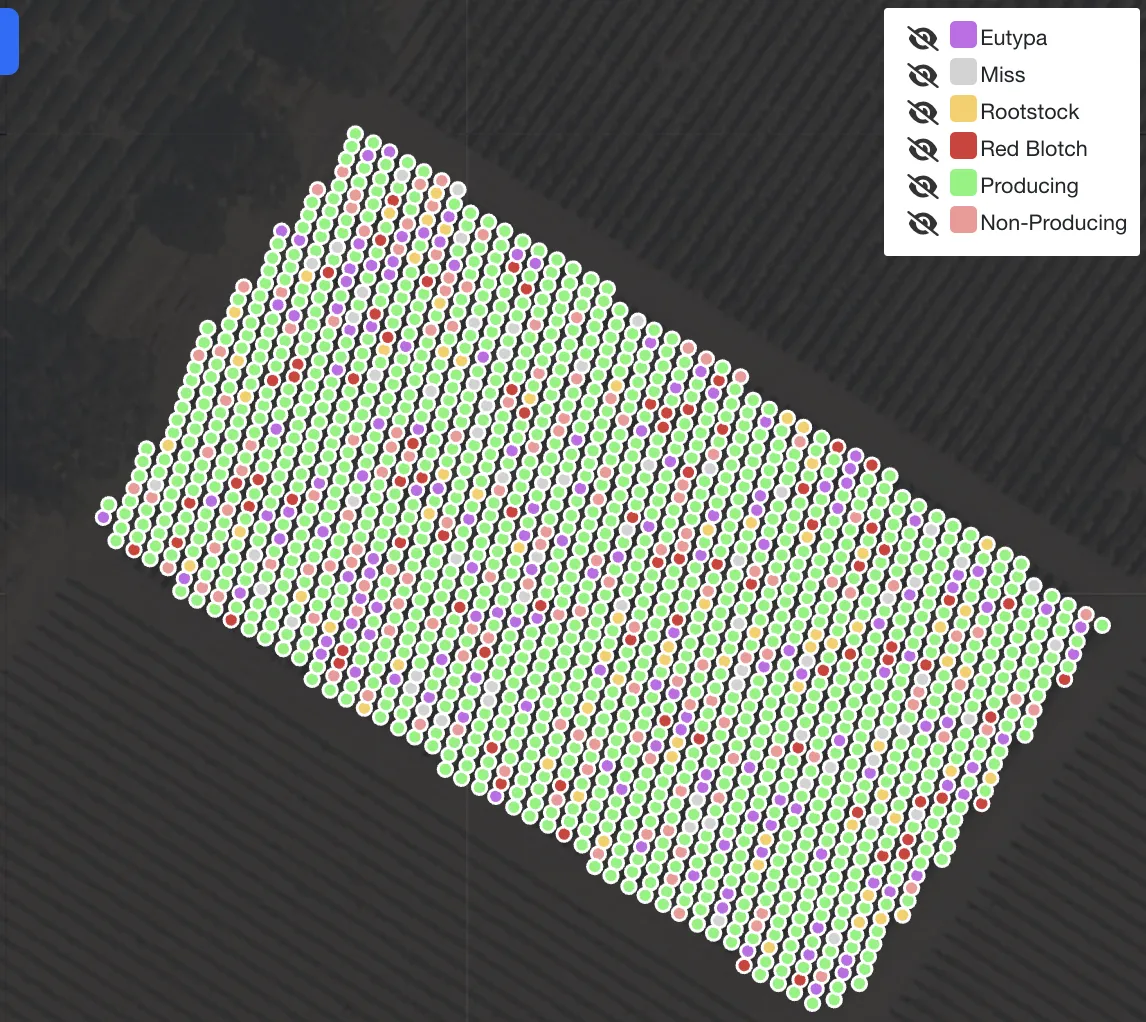
Some of the best-run properties in Napa have moved to vine-by-vine tracking systems, including tools like Sentinel, that give them a living inventory of their vineyard. They know their virus load by block and by row. They can show a buyer or an insurance adjuster exactly what happened to a specific vine over three seasons. They catch replant failures in the first year instead of the third.
This is not about technology for its own sake. It is about having the information you need to make good decisions when bad decisions are unusually costly.
The Real Risk Is What You Discover Too Late
The most expensive outcome in a downturn is not a cost you incur. It is a problem you discover 18 months after you could have addressed it. A virus pocket that spread across three rows because nobody mapped it. A replant block that failed because the nursery stock was infected and nobody tracked the source. A farming crew that missed half the roguing because there was no system to verify their work.
These are not hypothetical scenarios. They are common. And in a market where Napa land values are being reexamined and every bottle needs to justify its price point, they are the kind of mistakes that compound.
Looking Forward
The wine industry has been through corrections before, and it will come through this one. The properties that emerge strongest will not necessarily be the ones with the deepest pockets. They will be the ones that understood their vineyards at the highest resolution, made precise decisions instead of broad ones, and protected their best blocks while strategically letting go of their worst.
The downturn will pass. The vines you save or lose during it will produce fruit for the next 30 years. That is the timeline worth managing to.
<!-- related-reading -->